
Blog

Smartphone Neck Pain:

What Is Your Smartphone Doing to Your Spine?

Hours spent looking down at your phone can contribute to neck pain, upper back tension, shoulder tightness and headaches. Understanding your posture and making simple changes can help protect your spine.

Author:

Michael Zylstra, Chiropractor

|

Published May 2, 2017

Share this Article:

Today’s technology is fantastic. So fantastic that we find ourselves sitting in front of any sort of screen for a fair chunk of our day. But how is that affecting our body and what can we do about it?

As a chiropractor, I see back pain every day. However, more and more people are presenting to the clinic with upper back and lower neck pain now more than ever. The athletes generally present with dull neck pain with an inability to turn their neck as far to one side, tension in their shoulders and some present with daily headaches. They can’t recall any traumatic event that may have caused it but it has been around for at least one week, sometimes even up to 2 weeks before presenting.

What is causing these symptoms?

Ergonomics are an essential part in maintaining a healthy and happy spine. However, they can be overlooked or not utilized because it may feel uncomfortable. Don’t be fooled by the word ergonomic and immediately think “I don’t work at a desk so it doesn’t apply to me”. Personal ergonomics are also very important.

The average person spends up to 1.5 hours a day sitting looking at their phone, 3.5 hours using a laptop or a desktop computer and up to 3 hours a day watching television.

How Smartphone Posture Increases Neck Load

Figure 1 represents the load that a person puts upon their neck when looking at a mobile device. As you can see from the far left figure, the model’s neck is at 0 degrees and the weight of the head is 10-12 pounds (4.5-5kgs). As the model’s neck flexes further forward, the load upon the neck increases to as much as 60 pounds (27kgs). That is the almost the equivalent of a large suitcase full of clothes.

Man looking down at his smartphone with a rounded posture

What Can You Do?

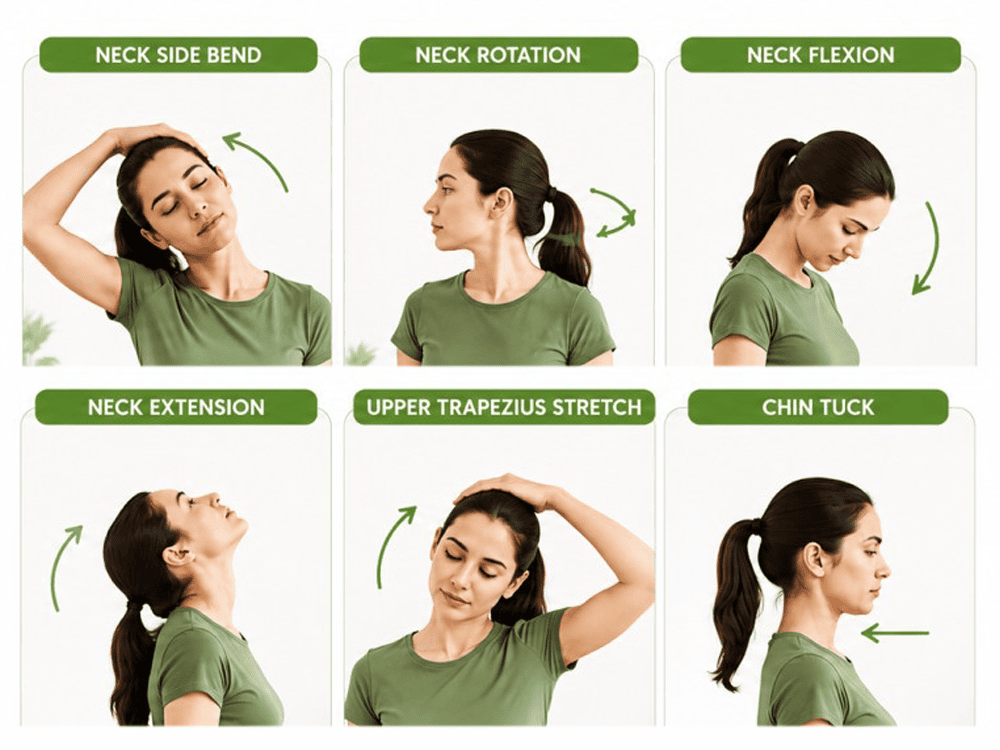
Stretching should be a part of everybody’s daily routine, especially if any body part is maintaining a constant position for an extended amount of time. Below (FIGURE 2) are some stretches that can prevent neck pain from occurring.

You should aim to hold each stretch for at least 10-15 seconds and repeat the stretch twice per session and twice per day. The aim is not to pull as hard as you can, as this will cause discomfort. Pull the muscle to a comfortable tension and apply a small amount of extra pressure.

With time, this stretch will become easier and easier and you may find yourself being able to position your head at angles you never thought possible.

Illustrated neck stretching exercises for improving neck mobility and flexibility

What Can We Do at PEAK?

At Peak our coaches are extensively trained to assist you with any neck, shoulder or back pain which you may have.

Treatment modalities which we utilize include dry needling, acupuncture, Active Release Technique, spinal manipulation, deep tissue massage and more.

It is our goal to ensure you can maintain or return back to what you enjoy doing pain-free. We encourage you to Dream Big and push yourself to achieve what you never thought possible.

Take Care of Your Neck and Spine

If you are suffering from headaches or a constant stiff/sore neck and nothing seems to be helping, book an appointment with one of our practitioners at Peak Sports And Spine Centre. We will ensure that you leave your appointment feeling engaged and positive that there is a way to rid this discomfort.

From Prevention to Performance.
Start Feeling Better Today!

Table of Contents

Read the Latest Articles

Osteoporosis: Why Strength Training Is One of the Best Investments You Can Make in Your Bone Health

Strength training and impact exercise can help support bone density, muscle strength and balance, reducing fracture risk and supporting bone health as we age.

Read More

How Hormones Influence Injuries in Females

Understand how hormonal changes during puberty, pregnancy, postpartum, perimenopause and menopause can influence injury risk and musculoskeletal health.

Read More

Corey Quinlan: Turning Setback Into Strength

A shoulder dislocation challenged Corey’s season, but progressive rehabilitation, strength training and determination are helping him build back stronger and return to touch football.

Read More

How To Invest In The Right Running Shoes

Choosing the right running shoes requires more than picking a popular brand. Learn the key factors that influence shoe selection, performance, comfort, and injury prevention.

Read More