Blog

TRAINING & RECOVERY:

When and How to Deload: A Guide to Deload Weeks

Training hard is only part of making progress. A planned deload can help reduce fatigue, support recovery and prepare your body for the next phase of training.

Author:

|

Published Nov 26, 2020

Share this Article:

With gyms and exercise classes resuming normal operations, we have seen an increase in the number of overuse injuries. Often these injuries happen when people perform more activity than what they are prepared for. Whether this is weights lifted or kilometers run, the story is the same. When too many sessions are completed too soon—and without adequate rest between these sessions—injury risk is increased. It is important to get the balance right between improving fitness and allowing enough recovery when we are fatigued.

What Is a Deload Week?

Research shows that we should have a programmed deload week every 10-12 weeks. If you are noticing yourself sleeping poorly, feeling run down, not progressing towards your goals, or developing aches and pains—then you may benefit from a deload week. A deload week is a week programmed whereby you give your body a relative rest from the stress of training. This is done by having an intentional reduction in intensity, and or volume. When planned appropriately, a deload week is designed to help our bodies recover, prevent injuries, break through plateaus, and perform better in the long run.

Understanding Supercompensation

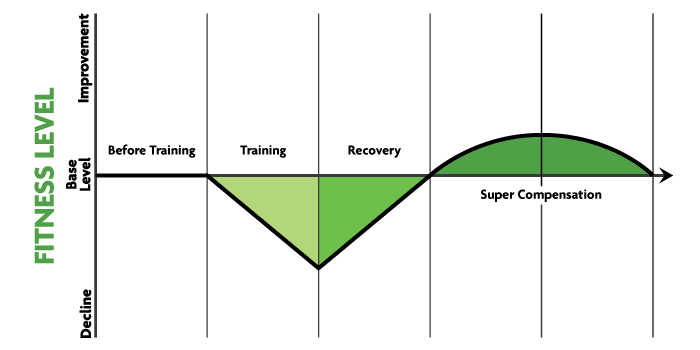
Deloading is based on something we call supercompensation – it is easy to explain using the graph below. We start at our base level of fitness, and then we train. This applies stress to our body which causes fatigue, and a temporary reduction in our fitness. We then recover, which allows our body to return to our baseline fitness. The third phase is the supercompensation phase – which some people will title the rebound phase, and this is when our body adapts from the training to a higher level of fitness. This graph can be applied over multiple timeframes, whether it’s a set in the gym, or a programmed 10-12 week block.

Fitness Recovery and Supercompensation Cycle
What Might a Deload Week Look Like?

This is variable depending on your training history in your chosen activity. A deload week isn’t synonymous with simply doing nothing—it means reducing your intensity, and or duration of workouts by 30-50%. An example is detailed below:

  • You could attend your normal gym class, and train at a self-reported 4/10 intensity level compared to your normal 10/10 level.
  • If you typically perform 4 working sets of gym exercises, then you could follow your normal program but only perform 2 sets.
  • You could stick to bodyweight exercises and walking to keep the body active.
  • You could emphasize mobility, stretching, and active recovery strategies such as swimming for the week.

Recovery Is Part of Training

Athletes often voice their concerns about losing their fitness, or strength during a deload week. But the deload week is designed to work as an investment in your training—it will enable your body to recover, so you can attack the following weeks worth of training with a higher intensity.

Train Smarter. Recover Better.

If you want to discuss your goals or training program with a coach at PEAK – then book in for an appointment to learn how we can help you best.

Dream Big!

Ready to Train With a Better Plan?

Table of Contents

Read the Latest Articles

Winter Footy Injuries: The Most Common Issues We’re Treating This Season (And How to Bounce Back Faster)

Winter footy injuries Brisbane players commonly face include hamstring strains, ankle sprains and shoulder injuries. Find out how to recover and return to the field safely.

Read More

Whiplash After a Car Accident: Why Rest and a Soft Collar Won’t Fix Your Neck

Whiplash after a car accident can cause lasting neck pain and stiffness. Learn why early movement matters and how PEAK Brisbane helps you recover.

Read More

Text Neck Is Real: Why Your Phone Habit Might Be Behind Your Neck Pain

Text neck can cause neck pain, headaches and upper back tension from prolonged screen use. Find out how PEAK Brisbane physiotherapists can help improve your posture.

Read More

Tennis Elbow: Why It Rarely Comes From Tennis (and Why Resting It Won’t Fix It)

Tennis elbow treatment Brisbane helps reduce elbow pain and rebuild tendon strength. Learn why tennis elbow develops, how to manage symptoms, and how PEAK physiotherapists can help.

Read More