 Spine Health
 Text Neck: Causes, Symptoms & How to Fix It
Hours on your phone or laptop can lead to text neck. Learn the symptoms, causes and how PEAK’s Brisbane team can help relieve neck...
Read more
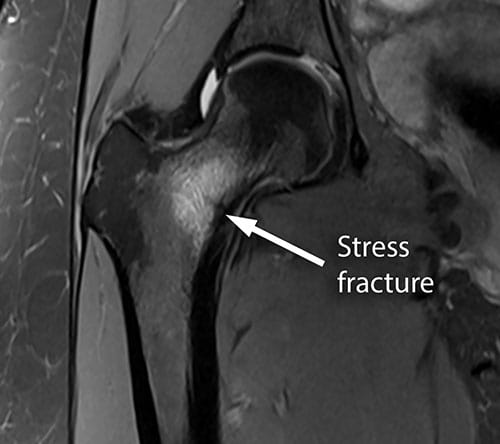
A femoral shaft bone stress injury sits on the serious end of the bone stress spectrum. Unlike shin splints or low-grade stress reactions, this type of injury affects the thick cortical bone of the femur — the strongest bone in the body.
Bone stress injuries occur when repetitive load exceeds the bone’s ability to remodel. Normally, bone is constantly breaking down and rebuilding in response to training stress. But when intensity, volume, or life stress outpace recovery, microdamage accumulates faster than the body can repair it. In weight-bearing bones like the femur, that imbalance can quickly escalate.
For an endurance athlete logging high running mileage and accumulating fatigue across swim, bike, and run sessions, the femur absorbs significant cyclic loading forces. Add in inadequate recovery, energy deficiency, or sudden training spikes, and the risk compounds.
Tess didn’t just have to stop running. She had to respect the biology of bone healing — a process that doesn’t respond to grit or stubbornness.
Bone heals on its own timeline.
If Ironman training demands physical resilience, injury demands psychological resilience. October became a season of crutches, modified loading, and careful progression. Progress wasn’t linear. Bone stress recovery rarely is. It requires incremental reintroduction of load, monitoring symptoms, and resisting the temptation to “test it.”
For Tess, this meant having to trust the process and gradually moving back towards her first goal of returning to run.
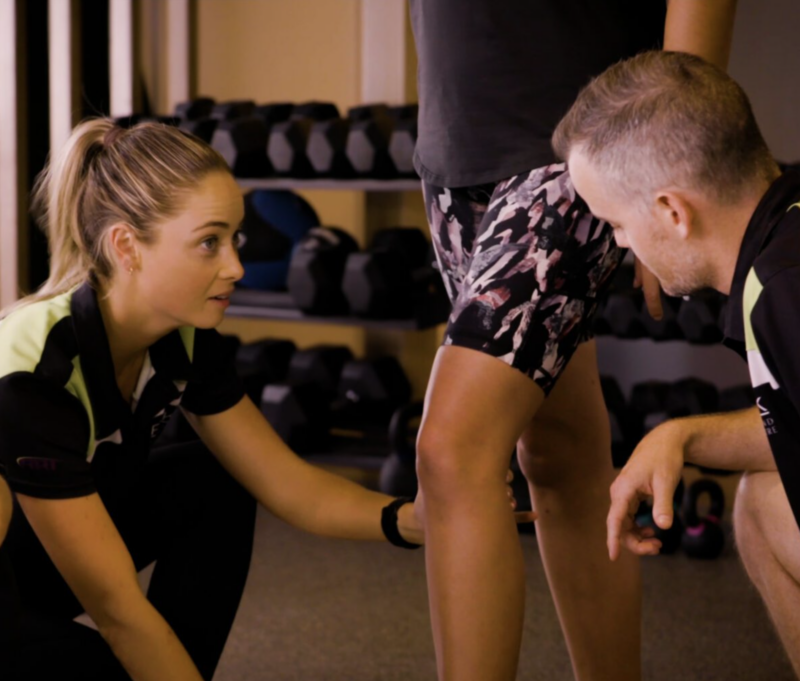
Returning from a femoral shaft stress injury requires more than simply adding kilometres back in.
The femur responds to load — but it needs progressive, specific loading. Tess’ rehabilitation program emphasised:
Every run back wasn’t about pace. It was about tolerance.
Five minutes pain-free.
Ten minutes stable the next day.
Gradual volume progression week by week.
The comeback wasn’t flashy. It was meticulous.

Now, months later, Tess is building toward the Cairns Ironman.
Cairns is no small target. It’s a demanding long-course race in Far North Queensland — heat, humidity, rolling bike terrain, and a marathon that rewards durability.
Which makes it perfect.
Because this time, Tess isn’t just training for fitness. She’s training for resilience. For strength under load. For the kind of durability that can only be built through forced patience.
The irony of bone stress injury is that it teaches you how to become harder to break.
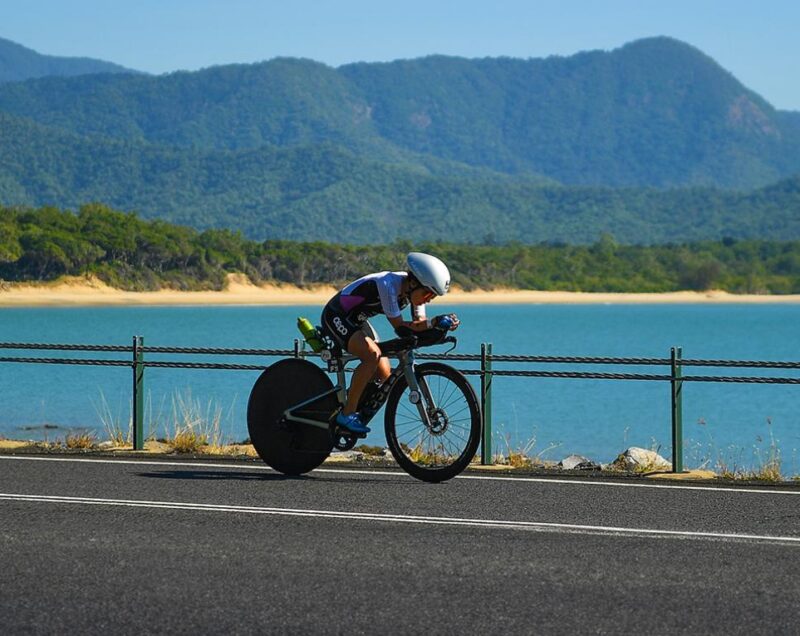
Pre-injury Tess trained hard.
Post-injury Tess trains smart.
She fuels better.
She respects recovery.
She prioritises strength.
She understands the signals her body gives her.
And perhaps most importantly, she knows that missing a session doesn’t define her — but long-term consistency does.
The femur that once failed under load is now adapting to it.
Stronger. Denser. Prepared.
If you watch Tess on the start line in Cairns, you won’t see the crutches from October. You won’t see the weeks of modified training or the cautious first steps back to running. But they’ll be there. In every disciplined decision. In every kilometre built patiently. In every choice to respect the process.
Cairns isn’t just another race on the calendar.
It’s proof that setbacks can be foundations.
That biology demands patience.
And that sometimes the strongest athletes are the ones who learn how to rebuild.
Spine Health Hours on your phone or laptop can lead to text neck. Learn the symptoms, causes and how PEAK’s Brisbane team can help relieve neck...
Read more WorkCover Chiropractic
 Injured at work? Learn how WorkCover physiotherapy and chiropractic at PEAK can help you recover, manage your claim, and return to work with confidence.
Read more causes of lower back pain
 Lower back pain is one of the most universal health complaints there is. Globally, hundreds of millions of people are living with it at...
Read more DVA physiotherapy Brisbane
 Hold a DVA Gold or White Card? Learn how to access no-gap physiotherapy, chiropractic and podiatry care at PEAK Sports & Spine Centre in...
Read more running injury treatment
 Running injuries are common, but many can be prevented. Learn why they happen, how to reduce your risk, and how PEAK helps Brisbane runners...
Read more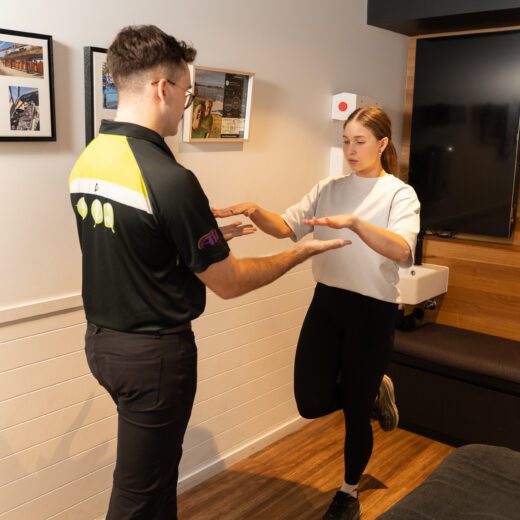 physiotherapy
 Dizziness and vertigo can make even simple daily activities feel overwhelming. From BPPV and vestibular migraines to post-concussion dizziness, understanding the cause is the...
Read more
Build Career Confidence: If you are training for the Gold Coast Marathon right now, or you are the kind of person who has a...
Read more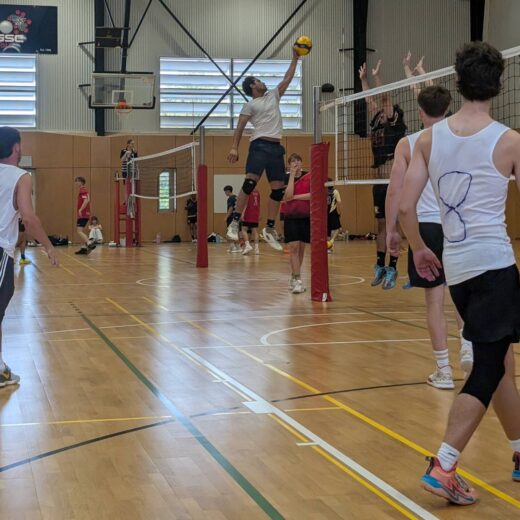 Athlete Recovery
 Stepping into an Athlete’s Shoes: Keagan’s ACL Journey The injury knowledge that you hold as a PEAK coach, unfortunately, does not keep you immune to sustaining...
Read more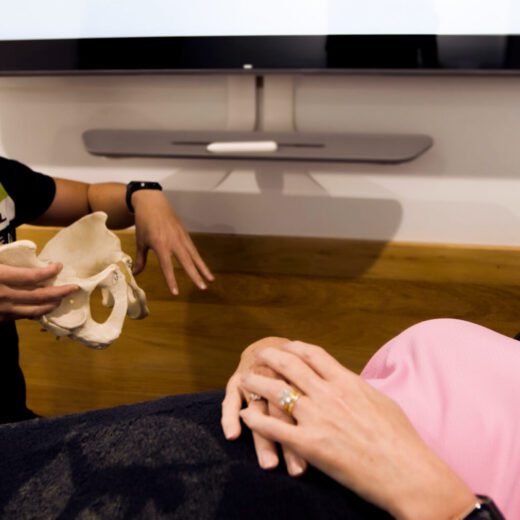 Menopause
 For many women, Menopause can feel like a sudden shift in how their body moves, feels, and recovers. Menopause Physiotherapy can help women manage...
Read more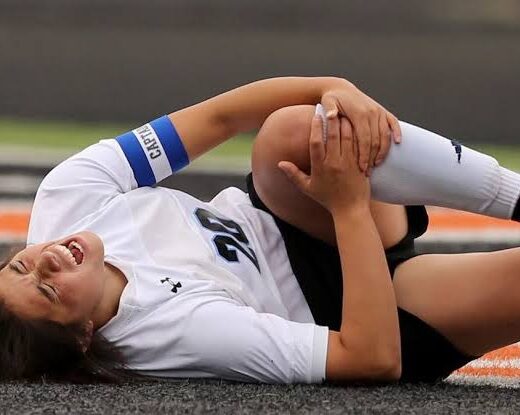 Knee Injury
 Knowing what to do after a knee injury can make a significant difference to recovery. Early assessment and diagnosis are essential, and physiotherapists play...
Read moreNot exactly what you're looking for?
View all articles










Can't find what you're after?
View all ServicesOr email the PEAK team at info@peakssc.com.au
To make a booking outside of business hours, please use our form by clicking here.
To make a booking outside of business hours, please use our form by clicking here.