What Is a High Ankle Sprain?
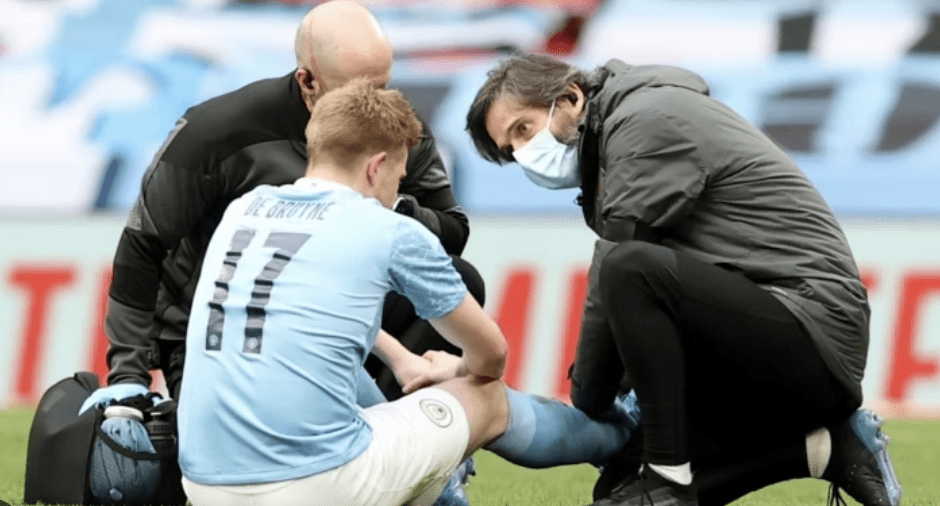
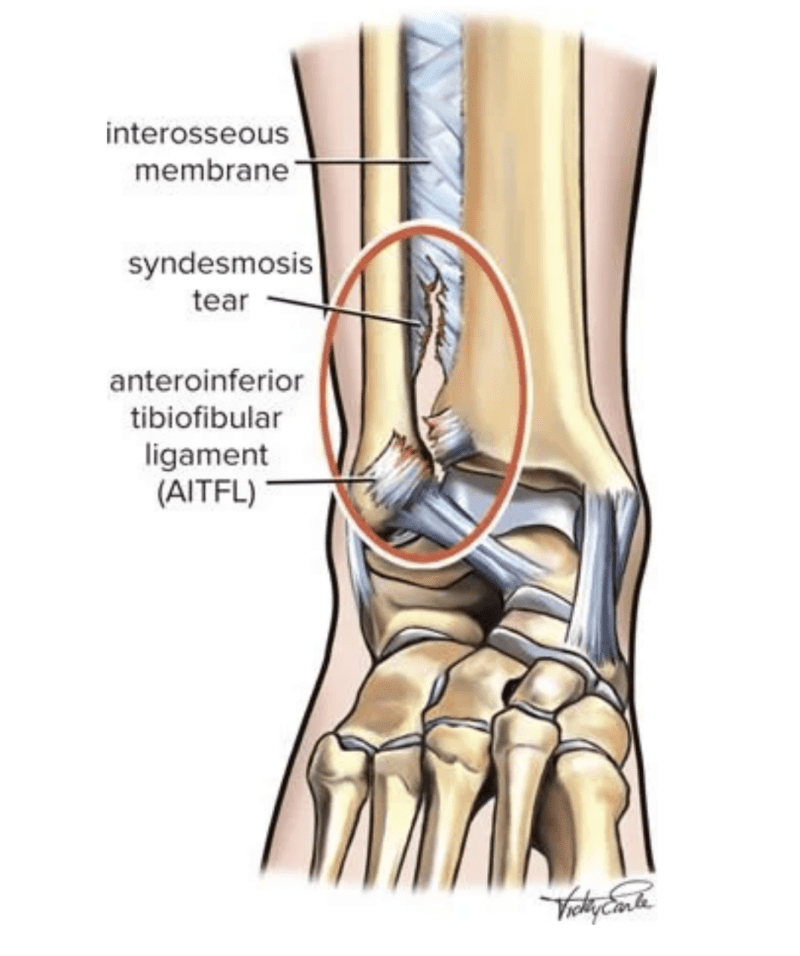
This injury involves the ligaments that connect the two lower leg bones: the tibia and fibula, just above the ankle joint. These structures help stabilise the ankle during walking, running, jumping, and changing direction. High ankle sprains commonly occur during sports involving twisting movements, sudden direction changes, or awkward landings, making them frequent in football, basketball, soccer, rugby, and running-based activities.
Signs and Symptoms of a High Ankle Sprain
People with a high ankle sprain may experience:
- Pain above the ankle joint
- Difficulty walking or weight-bearing
- Pain when twisting or rotating the foot
- Swelling or tenderness at the front of the ankle
- A feeling of instability during movement
Unlike a standard ankle sprain, symptoms may not appear severe initially, but the injury can become persistent and frustrating if not managed properly.
Because these ligaments play an important role in lower leg stability, high ankle sprains often take longer to heal than regular ankle sprains. Returning to sport or activity too early may increase the risk of ongoing pain, reduced performance, recurrent injury, or chronic instability, which is why appropriate rehabilitation is important.
MORE SEVERE CASES When a High Ankle Sprain May Require Further Management
In more severe cases, a high ankle sprain may involve significant ligament damage or widening between the tibia and fibula. These injuries can sometimes require surgical management to restore ankle stability. Delayed diagnosis or returning to sport too early may increase the risk of ongoing instability, cartilage damage, prolonged recovery, and the potential need for surgical intervention. Early assessment and appropriate management are important to reduce these risks and support optimal healing.
Managing Pain and Protecting the Injury
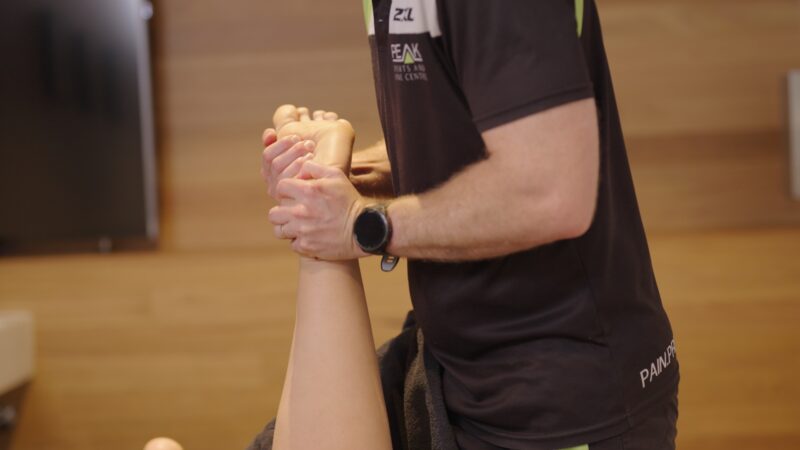
Physiotherapy can play a key role in supporting recovery and helping patients return to activity safely. At Peak Sports & Spine Centre Physiotherapy Services, treatment begins with a thorough assessment to determine the severity of the injury and identify any limitations in strength, mobility, or balance. In some cases, imaging or referral for further assessment may also be recommended.
Early treatment focuses on reducing pain and irritation while protecting the injured structures during healing. This may involve:
- Activity modification advice
- Taping or bracing
- Guided exercises to maintain mobility without excessive stress on the ankle
As symptoms improve, rehabilitation progresses toward restoring:
- Ankle mobility
- Calf strength
- Balance and proprioception
- Lower limb stability
RESTORING STRENGTH AND STABILITY Rehabilitation Progression
Physiotherapists also help improve movement patterns and rebuild confidence through more dynamic exercises tailored to the individual’s goals and activity level.
RETURNING TO SPORT Return-to-Sport Rehabilitation
For athletes and active individuals, return-to-sport rehabilitation is an essential part of recovery. Sport-specific drills, agility exercises, and gradual loading programs help prepare the ankle for the demands of running, jumping, and changing direction again. Integrating progressive rehabilitation with targeted strength work can also support long-term performance and reduce reinjury risk. Learn more about Strength & Conditioning at Peak Sports & Spine Centre.
Seeking treatment early after an ankle injury may help improve recovery outcomes and reduce the likelihood of long-term instability or recurring ankle problems. If you are experiencing ongoing ankle pain, difficulty weight-bearing, or symptoms that are not improving, physiotherapy may help guide your recovery and support a safe return to exercise, sport, and everyday activity.
SEEKING EARLY TREATMENT Supporting Long-Term Recovery
To learn more about treatment and rehabilitation options, visit Peak Sports & Spine Centre Physiotherapy Services.

Let's get started — How can we help?
Physiotherapy

Chiropractic

Podiatry
Massage Therapy
Women's Health Physiotherapy

Running Program Tailored To Your Goals

Joint Mobilisation

Active Release Technique
Exercise Prescription

Real Time Ultrasound Imaging

Spinal Manipulation

Functional Movement Screen

Knee Pain Treatment
Hamstring Strain Treatment

Hip Pain Treatment
Upper, Middle & Lower Back Pain
Neck Pain Treatment

Shoulder Pain & Rotator Cuff Tear
Can't find what you're after?
View all ServicesOr email the PEAK team at info@peakssc.com.au
Hawthorne
- Phone: (07) 3399 3318
- Fax: (07) 3319 6577
Address
5/171 Riding Road,Hawthorne, QLD, 4171 Get Directions
Opening Hours -
6 days per week
- Monday - Friday: 7:00 am - 8:00 pm
- Saturday: 7:00 am - 1:00 pm
To make a booking outside of business hours, please use our form by clicking here.
New Farm
- Phone: (07) 3399 4668
- Fax: (07) 3319 6577
Address
1/15 Lamington Street,New Farm, QLD, 4005 Get Directions
Opening Hours -
6 days per week
- Monday: 7:00 am - 8:00 pm
- Tuesday: 7:00 am - 8:00 pm
- Wednesday: 9:00 am - 8:00 pm
- Thursday: 10:00 am - 8:00 pm
- Friday: 7:00 am - 3:00 pm
- Saturday: 7:00 am - 3:00 pm
To make a booking outside of business hours, please use our form by clicking here.