
Blog
Menopause
The female body goes through a number of key life stages, one being menopause. Menopause itself is something that is often not spoken about. Over 50% of Australians identify as women, meaning that over half the country’s population either have or are going to at some stage go through menopause.
Share this Article:
Key Stages
This phase in a woman’s life is often referred to as menopause – however, if we break it down into key stages, menopause is simply a moment in time. It is exactly one year since a woman’s last period. The phase leading up to menopause is actually called perimenopause, which is where the majority of women’s symptoms occur and is the time between the last normal period and the final period. Following menopause is postmenopause, which is when there is a permanent cessation of the menstrual cycle.
During the perimenopausal phase there are a number of common symptoms that occur which normally start in women’s mid-30s.
- Period becoming irregular
- Hot flushes especially night sweats
- Sleep changes
- Fatigue
- Irritability and mood swings
- Increased risk of depression and anxiety
- Bone loss and increased risk of osteoporosis and fragility fracture
- Increased risk of developing diabetes and cardiovascular disease
- Poor gut health and constipation
- Poor healing ability
Why These Changes Occur
These changes are due to fluctuations in hormone levels and can happen over a 5-10 year time-frame. There is no way of knowing or predicting the age at which this will occur. During this time oestrogen and progesterone levels start to decline. Oestrogen itself has over 400 functions within the body, hence why it can lead to affecting so many areas within the body and result in physical and psychological changes.
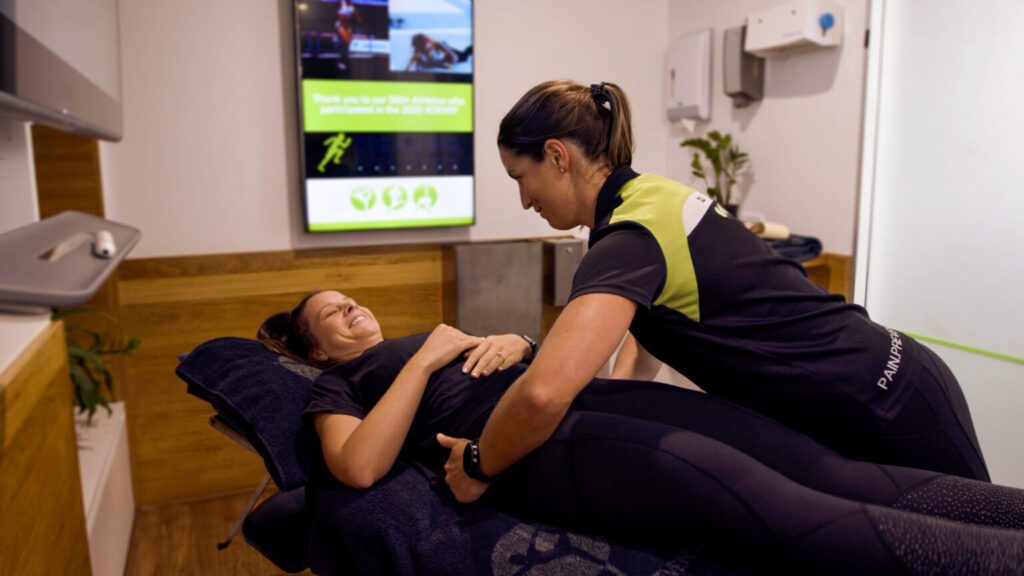
This can all sound very overwhelming and sadly the rate of depression in women increases during this time. However, this is not something that you have to go through alone! Here at PEAK, we have a team of Women’s Health Physiotherapists that are wanting to help you through this time.
How a Women’s Health Physiotherapist Can Help
Although we cannot stop this process from occurring, there are a number of things that a Women’s Health Physiotherapist can help you with:
Helping manage any aches and pains you may have. Oestrogen is a hormone that helps with tissue recovery, because there is less of this in the body it can result in slower timeframes for healing. It is very common for women to experience low back pain as well as hip and shoulder pain during this time.
Strengthen your muscles and build bone density. This can help avoid developing conditions such as osteoporosis and avoiding hip and low back pain.
Promote healthy bladder and bowel habits. During this time it is very common for women to experience constipation due to progesterone levels reducing. To help manage this your Women’s Health Physio can help with providing tips for good digestive health and toileting habits.
Managing hot flushes. Exercise has been shown to help with temperature regulation through sweat and therefore can help reduce night sweats.
Be a listening ear! This time in a women’s life can feel very overwhelming and a Women’s Health Physiotherapist has the knowledge to help guide and support you through this time.
If you are going through menopause and would like to discuss how one of our Women’s Health Physiotherapists can help you.
Book in to see our team of Coaches today!