AC Joint Injuries in Footy Explained
Understand what causes AC joint injuries, how they recover, when surgery may be needed, and how PEAK can help you return to sport safely and confidently.
Read More

Blog
BUNION & FOOT HEALTH
Bunions are common, but surgery isn’t always the answer. Learn what causes them, what can actually help, and when it’s worth seeing a podiatrist.
Share this Article:
Brisbane is a barefoot city. Thongs at the shops, bare feet at the beach, sandals from September to May. Which means that unlike people in colder places, you cannot hide a bunion here, and plenty of our patients tell us the same story: they noticed the bump years ago, they have been quietly watching it grow, and they have been putting off doing anything about it because they assume the only real fix is surgery.
Here is the good news up front. Most of what people believe about bunions is wrong, including the idea that your shoes caused it, the idea that it is your fault, and the idea that surgery is the inevitable endpoint. The research on this is clearer than you would expect, and some of the best of it was done right here in Brisbane.
A bunion, or hallux valgus to give it its clinical name, is not a lump of new bone growing on the side of your foot. It is a slow change in the alignment of the joint at the base of your big toe. The long bone behind the toe, the first metatarsal, drifts outward, the big toe itself angles in toward its neighbours, and the joint between them starts to sit further and further out of line. The bump you can see is mostly the head of that metatarsal becoming more prominent as the joint migrates, sometimes with an irritated, thickened bursa over the top from rubbing on footwear.
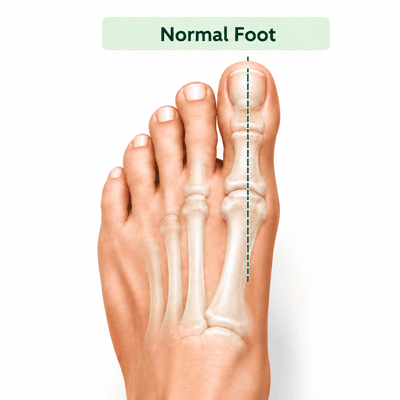
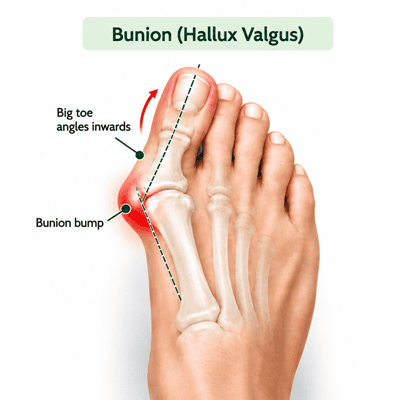
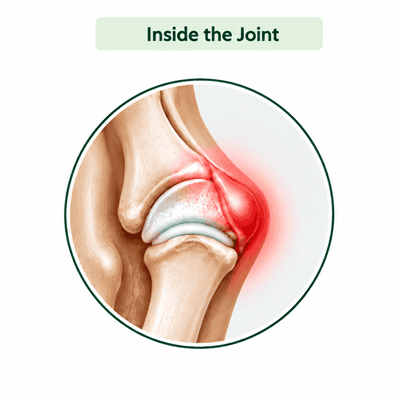
That distinction matters, because it changes what treatment can and cannot do. There is nothing to dissolve, shave down with creams, or shrink with gadgets. There is a joint whose position and loading have changed, and everything sensible in conservative care is about making that joint comfortable, strong and functional, and slowing the drift.
It is also extremely common. A systematic review led by researchers at Queensland University of Technology, pooling data from 76 studies, found hallux valgus in around 23 per cent of adults aged 18 to 65 and around 36 per cent of people over 65, with women affected roughly twice as often as men. If you have one, you are in very large company.
This is where the biggest myth lives, so let us take it head on. Bunions are not simply the price you pay for years of bad shoes. The evidence points to a stack of factors, and the largest one is the one you were born with:
Walter Soodjaithum, podiatrist at PEAK, sees the delay-and-worry pattern constantly.
“People almost apologise when they finally show me their bunion, as if they did something wrong. The first thing I tell them is that the strongest predictor is family history, so the guilt can go. The second thing I tell them is that the size of the bump is not what decides treatment. I have patients with large bunions and no pain who mostly need footwear advice and a strength program, and patients with small bunions and an angry, swollen joint who need much more active care. We treat the pain, the function and the direction it is heading, not the photo.”
“The other conversation I have every week is about the gadgets. Splints, spacers, correctors sold online with before and after photos. Some of those tools have a place for comfort. None of them will straighten a bunion, and nobody should be spending hundreds of dollars believing they will.”
Bunion care at PEAK follows our Pain, Prevention, Performance philosophy, and it maps onto this condition unusually well.
Pain comes first. If the joint is sore, we settle it. That can include footwear changes with a genuinely wide toe box, padding to stop the bump rubbing, mobilisation of the joint, and orthotics where the mechanics justify them. The evidence here is honest rather than magical: a landmark randomised trial published in JAMA compared surgery, orthoses and watchful waiting in people with painful bunions and found orthoses reduced pain compared with waiting at six months, while surgery produced the best pain outcomes by twelve months. A more recent systematic review found that orthoses, particularly designs using a toe separator, can relieve pain and may improve the toe angle by a small amount, but no conservative tool reverses the underlying bony drift. We tell you that before you spend a cent, which is the same honesty we brought to our recent post on whether you need orthotics at all.
Then prevention. Because bunions progress slowly, the middle of the story is where podiatry earns its keep. That means strengthening the muscles that stabilise the big toe and the arch, keeping the joint mobile, sorting out the rolling-in mechanics that overload the inside of the foot, and getting you into footwear you actually enjoy wearing that is not quietly making things worse. The goal is a joint that hurts less, works better and drifts slower.
Then performance. A bunion is not a reason to stop walking, running, netball or anything else, and keeping you doing the thing you love is the point of the exercise. The big toe is your push-off. We want it strong, we want it comfortable in your boots or runners, and we want the rest of the chain, calf, arch and hip, doing its share so the joint is not carrying more than its load.
And when surgery genuinely is the right call, usually when pain keeps interrupting life despite good conservative care, we say so and help you get to the right surgeon with a clear question. Surgery for a painful bunion has good evidence behind it. Surgery for a painless bump you simply dislike the look of is a much more debatable proposition, and a good podiatrist will talk you through that difference honestly.
Audit your shoe cupboard. Look for a toe box wide enough that the upper does not press on the bump, and save narrow or pointed shoes and heels for occasions rather than every day.
Try a simple gel pad or sleeve over the bump if rubbing is the main problem. Cheap, and often surprisingly effective for comfort.
A toe spacer between the first and second toes is worth trialling. The evidence supports it mainly for comfort, with any change in toe angle being modest, so treat it as symptom relief rather than a cure.
Start gentle big toe strength work. Practise gripping a towel with your toes, and try ‘toe yoga’, lifting the big toe while the others stay down, then swapping. Awkward at first is normal.
Keep the joint moving. Gently bend and straighten the big toe through its range daily. Stiff joints hurt more than mobile ones.
Skip the expensive online bunion correctors that promise realignment. Nothing worn on the foot part-time reverses a bony drift.
Get seen promptly if the joint becomes suddenly hot, red and exquisitely painful without injury, since that pattern can be gout rather than the bunion, or if you develop numbness, rapid change in shape, or pain that is stopping you walking normally.
If you have been watching a bump slowly change for years, the best time to have it looked at is while it is still a small problem. You do not need a referral to book. Come in, put the guilt down, and let us help you keep chasing experiences you never felt possible, comfortable big toe included.
Our podiatrists at PEAK’s Brisbane clinics assess bunions properly: the joint itself, the way you move, the shoes you live in and the goals you are working toward. From there we build a plan that might include hands-on treatment, a targeted strength program, footwear guidance for real life in Queensland, orthotics where they will genuinely help, and a straight answer about whether a surgical opinion is worth your time. Our physiotherapists are alongside if the story involves the knee, hip or back compensating further up the chain.
Sources referenced: Nix et al., Journal of Foot and Ankle Research, 2010 (prevalence of hallux valgus in the general population, systematic review and meta-analysis); Hannan et al., Arthritis Care & Research, 2013 (Framingham Foot Study, high heritability of hallux valgus and lesser toe deformities); Torkki et al., JAMA, 2001 (surgery vs orthosis vs watchful waiting for hallux valgus, randomised controlled trial); Kwan et al., BMJ Open, 2021 (hallux valgus orthosis characteristics and effectiveness, systematic review with meta-analysis).
Give Your Feet the Right Support.