 Oliver Foran
 From Sea Level to the Summit: Oliver Foran
Oliver Foran: From sea level to the summit of Mount Everest in just 50 days, Oliver Foran’s world record journey is a remarkable story...
Read more
Increasingly, high-quality research reinforces the value of intentional, physical activity in enhancing cognitive function, improving attention, and supporting emotional regulation in individuals with ADHD. This positions physiotherapy as an important, evidence-based component of a well-rounded treatment plan for ADHD management, at all ages and stages of life.

Always on the go, Talks a lot, Restless mind

Easily distracted, Often lost in thought, Forgets things

Mix of traits, Distracted & restless, Varies day to day
Boosts Attention and Cognitive Function
One of the core challenges in ADHD is difficulty sustaining attention. Aerobic exercise increases the production of dopamine and norepinephrine, the neurotransmitters responsible for focus, motivation, and executive functioning. For individuals with ADHD, who typically have lower baseline levels, exercise can act like a natural stimulant. Exercise programs designed by a physiotherapist with structured, engaging and purposeful movement that challenges the body in different ways can help train the brain to remain attentive during physical activity.
Reduces Hyperactivity and Impulsivity
Exercise provides a healthy, regulated outlet for excess energy. Activities that require precision, balance, or sequential movement help individuals practise self-regulation and movement control. As a result, many people experience fewer restless behaviours and improved impulse management following regular exercise.
Improves Executive Functioning
Executive function includes planning, organisation, working memory, and problem-solving, which are all areas commonly affected in ADHD. Exercises that involve coordination, sequencing, decision-making, or following multi-step instructions can strengthen these cognitive abilities. Physiotherapists often design such tasks intentionally to support brain-body integration.
Enhances Mood and Emotional Regulation
People with ADHD often experience emotional lability, frustration, or anxiety. Exercise supports the release of endorphins and reduces stress hormone levels, helping stabilise mood. Movement practices such as yoga, pilates, and controlled breathing, all of which are commonly used in physiotherapy, can further support emotional regulation and overall calmness.
Supports Healthy Sleep
Poor sleep is a frequent concern for both children and adults with ADHD. Regular exercise promotes healthier circadian rhythms and more restorative sleep, which in turn improves daytime focus and behaviour. Physiotherapists can recommend the appropriate timing of exercise sessions and intensity that improve sleep without causing overstimulation.
Physiotherapists are uniquely placed to help individuals with ADHD because they design structured, goal-oriented, personalised exercise programs aligned with the person’s physical, cognitive, and emotional needs. This predictability and routine are particularly beneficial for individuals who thrive on clear guidance and consistency.
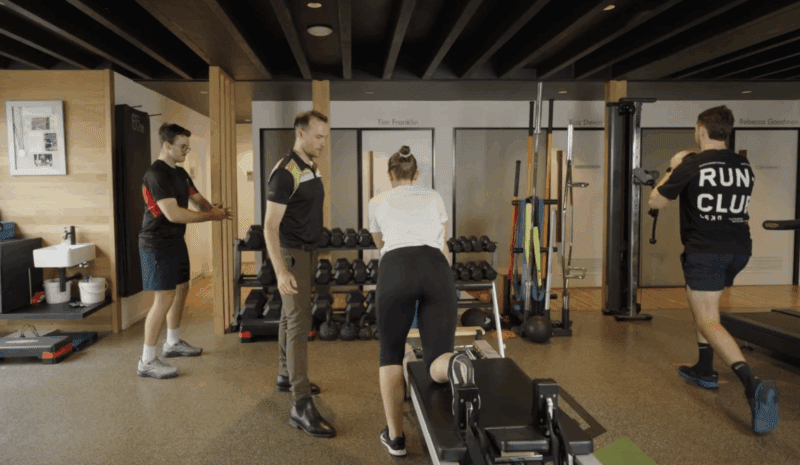
Below are different types of exercise that people with ADHD may like to explore. Your physiotherapist can help with guiding you to which form may be most suitable to your goals and all exercises can be adapted for children, adolescents, or adults.

Strongest evidence for improvements in attention and mood post exercise. Examples: Jogging or fast walking, Cycling, Swimming, Skipping or jump rope, Rowing, Dance-based fitness classes

Supports executive function and attention. Examples: Agility ladder drills, Catching and throwing activities, Balance board tasks, Obstacle courses, Shuttle runs

Enhances joint strength and stability. Examples: Squats, Lunges, Push-ups, Resistance band routines, Medicine ball tasks, Light supervised weight training

Helps reduce anxiety and improve self-regulation. Examples: Yoga, Pilates (reformer or mat), Tai Chi, Controlled breathing or guided relaxation

Develops communication skills, teamwork, and confidence. Examples: Soccer, Basketball, Gymnastics, Martial arts, Rock climbing
A PEAK physiotherapist can tailor these activities to ensure safety, engagement, and progression. If you’ve never seen a physiotherapist, take a little look at what else they can help with here!
Exercise is one of the most accessible and effective tools for supporting ADHD management, however we know sometimes it can be hard to stay motivated and accountable. That’s why our prevention classes are perfect for you, keeping you on track each week and moving closer to your goals! When guided by a physiotherapist, exercise becomes structured, purposeful, and targeted to your cognitive and physical needs. The classes allow for gradual progressions in exercise in a fun, engaging environment. From improved focus and behaviour to better sleep and emotional wellbeing, physiotherapy-supported movement can significantly enhance daily functioning and quality of life.
So what are you waiting for! Book an appointment today and we can be your personal cheerleader, helping you Dream Big and reach your experiences not felt possible!
Oliver Foran Oliver Foran: From sea level to the summit of Mount Everest in just 50 days, Oliver Foran’s world record journey is a remarkable story...
Read more Forward Head Posture
 Hours on your phone or laptop can lead to text neck. Learn the symptoms, causes and how PEAK’s Brisbane team can help relieve neck...
Read more Chiropractic
 Injured at work? Learn how WorkCover physiotherapy and chiropractic at PEAK can help you recover, manage your claim, and return to work with confidence.
Read more causes of lower back pain
 Lower back pain is one of the most universal health complaints there is. Globally, hundreds of millions of people are living with it at...
Read more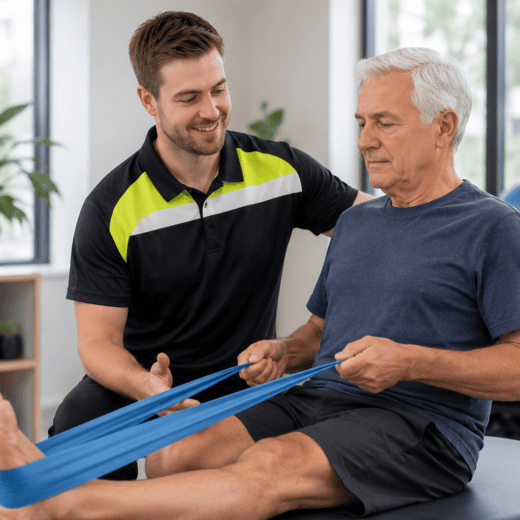 DVA podiatry Brisbane
 Hold a DVA Gold or White Card? Learn how to access no-gap physiotherapy, chiropractic and podiatry care at PEAK Sports & Spine Centre in...
Read more how to prevent running injuries
 Running injuries are common, but many can be prevented. Learn why they happen, how to reduce your risk, and how PEAK helps Brisbane runners...
Read more Causes of Dizziness
 Dizziness and vertigo can make even simple daily activities feel overwhelming. From BPPV and vestibular migraines to post-concussion dizziness, understanding the cause is the...
Read more
Build Career Confidence: If you are training for the Gold Coast Marathon right now, or you are the kind of person who has a...
Read more ACL Injury
 Stepping into an Athlete’s Shoes: Keagan’s ACL Journey The injury knowledge that you hold as a PEAK coach, unfortunately, does not keep you immune to sustaining...
Read more women's health
 For many women, Menopause can feel like a sudden shift in how their body moves, feels, and recovers. Menopause Physiotherapy can help women manage...
Read moreNot exactly what you're looking for?
View all articles










Can't find what you're after?
View all ServicesOr email the PEAK team at info@peakssc.com.au
To make a booking outside of business hours, please use our form by clicking here.
To make a booking outside of business hours, please use our form by clicking here.